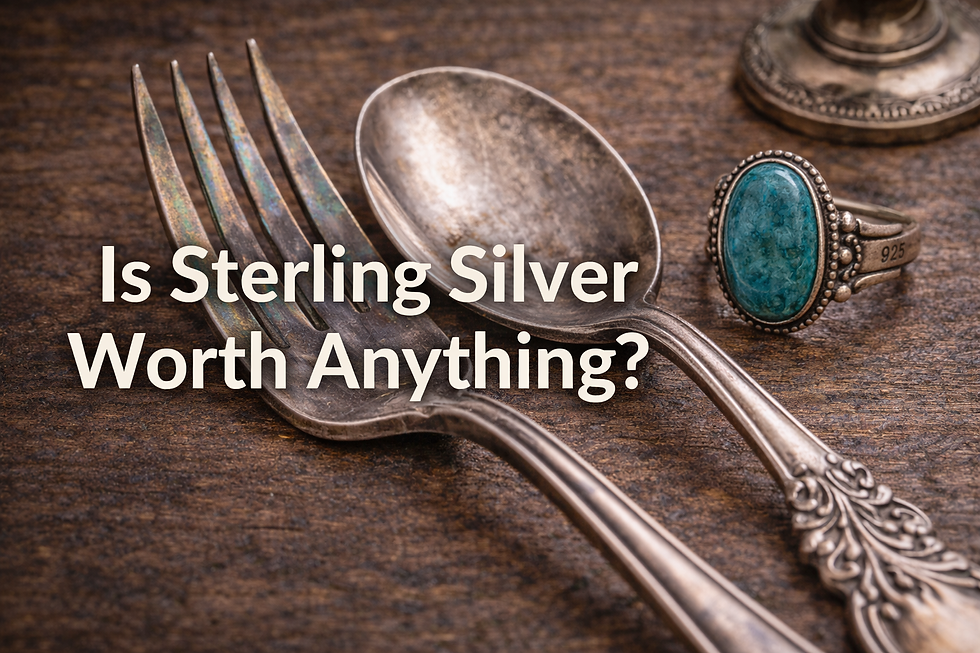
What Does “925” Mean on Silver?

Updated: Jan 21

What Does “925” Mean on Silver? (And Is It Real Silver?)
If you’ve ever looked at the back of a ring, bracelet, spoon, or serving piece and seen the number “925”, you’ve probably wondered what it actually means — and whether the item is really made of silver.
The short answer is:
“925” means the item is sterling silver.
That means it is real silver. But let’s explain exactly what that means, how it compares to silver-plated items, and why this mark matters so much.
What “925” Actually Means
Pure silver is very soft, so most silver objects are made from an alloy (a mixture of metals) to make them durable.
925 means the item is 92.5% pure silver
The remaining 7.5% is usually copper or another strengthening metal
This alloy is called sterling silver
So:
925 = Sterling Silver = Real Silver
Why Sterling Silver Isn’t 100% Pure
Pure silver (999 fine silver) is:
Too soft for most jewelry and household use
Easily bent, scratched, or damaged
Adding a small amount of another metal makes sterling silver:
Stronger
More durable
Better suited for:
Jewelry
Flatware
Serving pieces
Decorative items
Is 925 Silver Valuable?
Yes — because it is solid silver, not plated.
Sterling silver is generally valued based on:
The weight of the piece
The current silver market price
In many cases:
925 silver has real melt value.
However, some sterling silver pieces can be worth more than melt value if they are:
Antique or vintage
Made by a known or collectible maker
Part of a desirable set
Artist-made or especially decorative
How 925 Is Different from EPNS and Silver Plate
This is a very important distinction:
925 / Sterling = solid silver all the way through
EPNS = base metal with a thin layer of silver
Silver Plate = base metal with a thin layer of silver
From a value standpoint:
Sterling silver is valued by weight. EPNS and silver plate usually are not.
Common Marks That Mean Sterling Silver
You may see:
925
Sterling
Sometimes combined with a maker’s mark
If you see any of these, the item is almost always real sterling silver.
A Common Estate Sale Reality
At Afternoon Estate Sales, we frequently find items marked 925 mixed in with silver-plated pieces. Many families are surprised to learn that some items in a cabinet or drawer are solid silver while others that look similar are not. This is one of the reasons careful sorting and identification matters so much during an estate evaluation/Pricing.
Does Tarnish Affect the Value of Sterling Silver?
No.
Tarnish:
Is a surface reaction
Can usually be cleaned
Does not reduce the intrinsic silver content
Tarnished sterling silver is still real silver and still valuable.
Should You Scrap or Sell Sterling Silver?
That depends.
Some pieces are best:
Sold as functional or decorative items
Especially if they are:
Sets
By known makers
Antique or attractive
Other pieces that are:
Broken
Mismatched
Heavily worn
May be best valued for their silver content alone.
This is a judgment call that depends on the specific items.
How This Fits into the Bigger Silver Picture
If you want a full guide to identifying plated vs solid silver, see:
You may also find this helpful:
Final Thought
If you see “925” stamped on an item, you are almost always looking at real sterling silver. It has real metal value, can be worth more than scrap in some cases, and should never be confused with silver-plated items.
Understanding this one mark alone can make a very big difference when sorting through an estate. When families are sorting through silver and other valuables, working with a trusted Dallas estate sale company helps ensure nothing important is missed or undervalued. [Schedule Your Free Consultation]